



The House passed the Ratepayer bill, formally named the Ratepayer Protection Act, 417-3 on Wednesday, advancing a bipartisan response to concerns that households could be charged for electric-grid upgrades built to serve very large data centers. The measure is not law, does not impose rates by itself and would leave state regulators and publicly owned utilities free to reject its proposed standard.
The Sept. 16 vote cleared H.R. 9340 from the House, making Senate action the next legislative step. Reps. Gabe Evans, R-Colo., and Kathy Castor, D-Fla., introduced the bill in June. The official committee announcement and Associated Press reporting independently confirm the 417-3 tally.
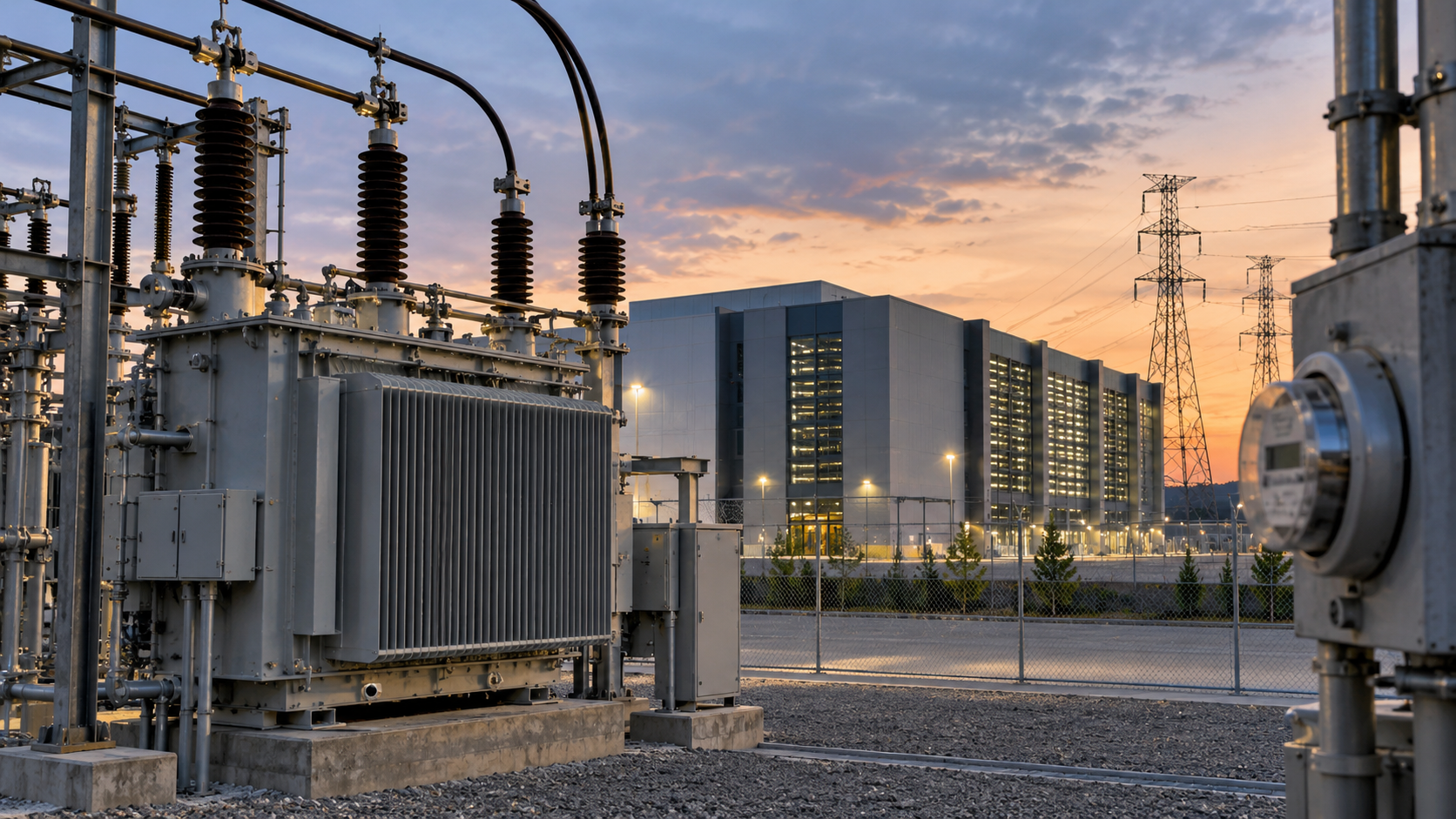
The House's action matters because a utility may need new power plants, transmission lines or local distribution equipment to connect a major new customer. The central policy question is whether the customer creating that demand should bear those incremental costs or whether some costs could be spread across a utility's other customers.
What the Ratepayer bill would do
The Ratepayer bill would add a federal standard to the Public Utility Regulatory Policies Act, or PURPA. Under the version reported by the House Energy and Commerce Committee, the standard would call for rates charged to a covered customer to recover the full incremental cost of generation, transmission and distribution upgrades needed to serve that customer.
The Ratepayer bill also addresses the risk that a customer could leave after a utility commits money to an upgrade. The standard says the customer's rate should recover those incremental costs even if the customer terminates its power contract or otherwise stops buying electricity. Before a utility begins a necessary upgrade, it would require financial assurances or contributions covering the project's cost.
The reported text defines a covered “large-load customer” as a nonresidential consumer whose facility primarily operates information-technology infrastructure for data storage or computing and whose peak demand reaches at least 100 megawatts at one site or campus. That language is narrower than the introduced version, which applied to any nonresidential customer at the same threshold.
Because the final post-vote engrossed text was not yet available for inspection Wednesday evening, that reported House text is the strongest accessible record of the provisions the chamber considered. Readers should not assume that every factory or other large power user is covered unless the final text confirms the broader language.
A requirement to consider, not a national rate
The Ratepayer bill would require state utility commissions and nonregulated utilities to begin considering the federal standard, or set a hearing date, within one year after enactment. They would have to finish that consideration and make a determination within two years.
Those deadlines would start only if the bill becomes law. They would not require every state to adopt the standard. The Congressional Budget Office says commissions may accept or reject PURPA ratemaking standards under current law, and it estimates that the bill would create a small intergovernmental administrative mandate but no effect on the federal budget.
The Ratepayer bill also contains a prior-action carve-out. Its consideration deadlines would not apply for a utility if, before enactment, the state had already implemented a comparable standard, a regulator or nonregulated utility had considered one in a proceeding, or the state legislature had voted on one.
That structure means the Ratepayer bill would not set each data center's retail rate from Washington. It would create a process and a benchmark for state-level decisions, while leaving the outcome to the authorities that already regulate utility rates.
Why supporters say the bill matters
Supporters argue that the standard could keep the cost of infrastructure built for data centers from being shifted to families and smaller businesses. The committee's release says 24 states are already taking related steps, while Evans described the legislation as a way to make large data centers pay for the infrastructure they require. Those are supporters' claims, not proof of a particular reduction in household bills.
Public concern is measurable, but it does not establish the bill's eventual effects. An AP-NORC and University of Chicago poll found nearly two-thirds of Americans were extremely or very concerned about data centers' effect on energy prices. Actual savings would depend on whether regulators adopt the standard, how they apply it and which costs utilities otherwise would have assigned to other customers.
Electric bills are one part of household affordability, but this legislation operates through state utility regulation, not monetary policy. That is separate from the borrowing-cost effects of the Federal Reserve's 2026 rate increase.
What the bill does not address
The Ratepayer bill focuses on incremental electric-system costs. It does not establish national rules for data-center water use, local land decisions, air pollution, noise or the broader environmental effects of new generation.
Food & Water Watch, which favors a national pause on new data-center development, told Reuters that the measure is too narrow because it does not address water, pollution and community effects. The Guardian separately reported similar criticism from that group and the Center for Biological Diversity. Those objections concern issues outside H.R. 9340's operative rate provisions.
Nor does House passage guarantee lower bills. Utility investment plans, state law, regulatory decisions, market design and the terms of individual service agreements would still matter. The Ratepayer bill creates no reliable basis for estimating the timing or size of household savings nationwide.
What readers should watch next
The Senate must pass the Ratepayer bill before it can go to the president. A current search of accessible congressional and sponsor records did not identify a Senate companion bill as of Wednesday evening, so the next concrete signal would be Senate receipt, referral or introduction of companion legislation.
Readers should also watch for the engrossed House text, which will show exactly what the chamber sent to the Senate, and for any Senate changes. If both chambers approve identical language and the president signs it, the one-year and two-year state consideration clocks would begin on enactment. Until then, H.R. 9340 remains a House-passed bill rather than federal law.