




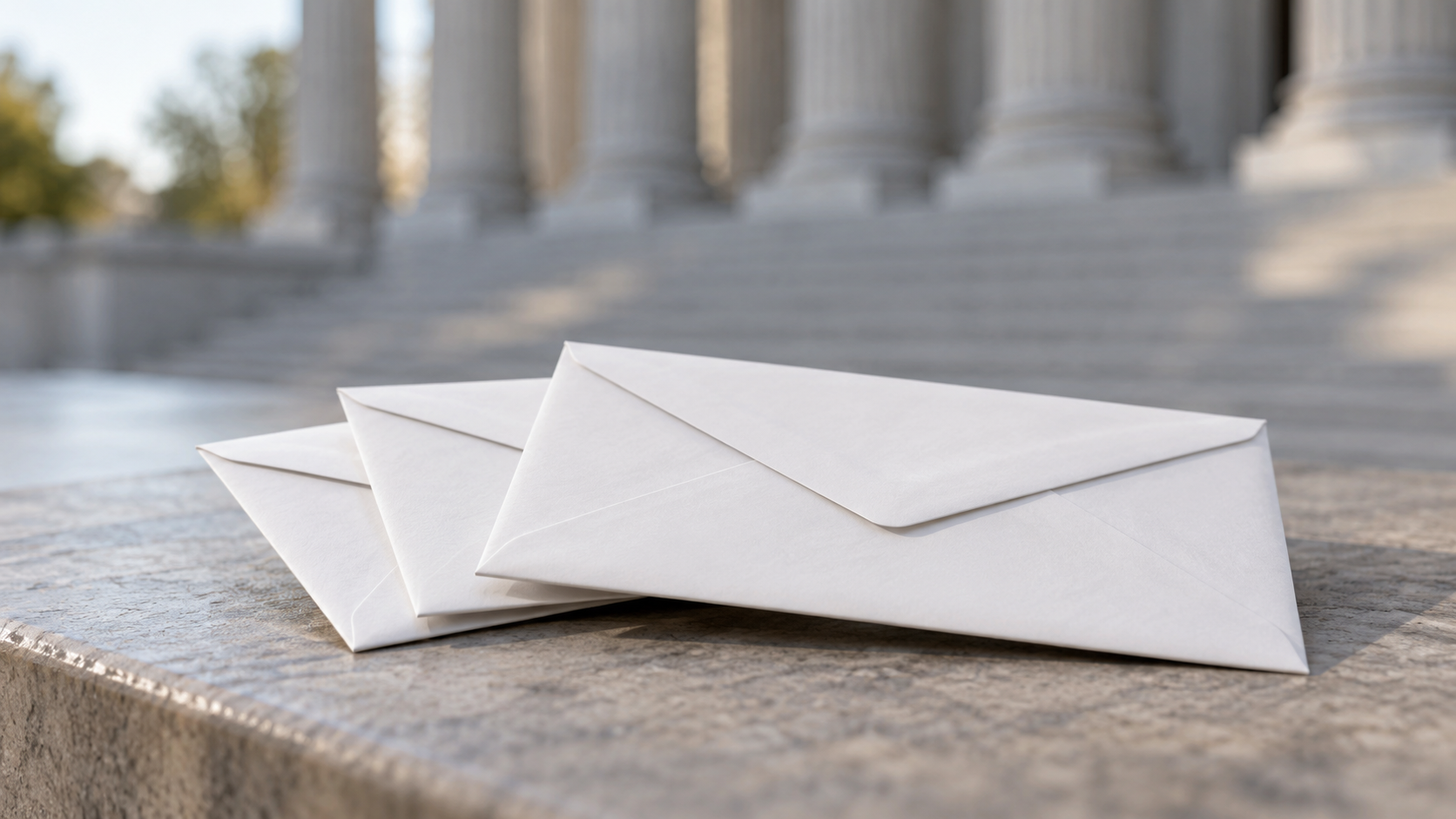
The Supreme Court’s refusal to suspend an injunction against the USPS ballot rule drew a public rebuke from President Donald Trump on September 15. He criticized the Court and the justices he appointed after they denied the Postal Service’s emergency request one day earlier. The response added a new dispute between the president and the judiciary, but it did not change the rule’s legal or operational status.
The Supreme Court docket still lists the September 14 denial as the latest proceeding in case 26A305 at this report’s verification cutoff. The Massachusetts injunction remains in place for elections through November 3, while a separate District of Columbia injunction continues to block the full regulation. Neither lawsuit has produced a final judgment on the rule’s ultimate legality.
What Trump said about the USPS ballot rule
Reuters and The Associated Press independently reported that Trump accused the Court of yielding to political pressure and described the ballot decision as damaging. He also said the justices he interviewed were no longer the people he selected. The reported post referred collectively to his appointees rather than identifying one justice by name.
Trump praised Justices Samuel Alito and Clarence Thomas, the only two justices who publicly dissented. The post did not reveal how each appointee voted or whether every one rejected the government’s broader legal position. Justice Brett Kavanaugh agreed that emergency relief should be denied for the 2026 elections, while writing separately that the Postal Service might have statutory authority to issue such a rule.
The remarks are significant because a president was publicly criticizing members of a separate branch after losing an emergency application. They do not have legal force over the Court’s order. The justices’ decision, not the President’s reaction, controls the immediate result, and lower-court proceedings continue under their own orders and schedules.
What the Supreme Court decided
The Court’s September 14 disposition denied the government’s request to stay U.S. District Judge Indira Talwani’s preliminary injunction. The unsigned order said the government was unlikely to succeed in challenging that injunction and that the equitable factors for emergency relief did not favor a stay. It did not finally decide whether the USPS ballot rule is lawful in every future application.
Kavanaugh’s concurrence focused on election timing. He wrote that state and local officials lacked enough time to implement the regulation reasonably before the 2026 elections. Alito, joined by Thomas, disagreed and argued that the government had met the standard for a stay. Those separate opinions explain individual justices’ reasoning; they are not substitutes for the Court’s operative denial.
What the USPS ballot rule would require
The August 26 final regulation sets envelope, barcode and data requirements for federal ballot mail. Authorized ballot mailers would submit envelope designs for review and provide voter-specific information through a Postal Service portal. Under the rule, noncompliant outbound ballot mail could be returned to the sender for correction before it was sent to voters.
The USPS ballot rule treats outgoing and returning envelopes differently. Its verification-and-rejection process applies to ballots sent by election officials to voters, not completed ballots traveling back from voters. Return envelopes still face design standards. The Postal Service says the regulation concerns mail operations and security; challengers argue that it exceeds postal authority and imposes election-administration burdens too close to voting.
Why two injunctions still matter
Talwani’s September 4 order blocks specified mandatory sections for elections through November 3 while allowing voluntary compliance consistent with state law. It addresses envelope review, portal registration, voter enrollment and outbound verification. The Supreme Court’s denial left that preliminary relief in place while the Massachusetts litigation continues.
U.S. District Judge Carl Nichols issued a broader District of Columbia order on September 13. It preliminarily enjoins USPS from implementing and enforcing the entire final regulation. Because these are separate orders in separate cases, changing one would not automatically dissolve the other. Both remain interim rulings rather than final merits decisions.
What changed after the response
The new development is Trump’s criticism of the Court, not a change in election procedure. The Supreme Court docket showed no filing or order after the September 14 denial at the verification cutoff. Searches of accessible USPS material also did not locate new agency guidance issued after the response. In practical terms, the USPS ballot rule remains blocked and election officials continue under the pre-rule framework described by AP.
The underlying legal disputes can still produce appeals, amended orders or final judgments. Any later change should be measured against the exact operative language of both injunctions, as with the separate federal student-rule case. For now, the President’s reaction is a matter of institutional accountability and political response; it is not an order that activates the USPS ballot rule or changes how ballots are processed.