


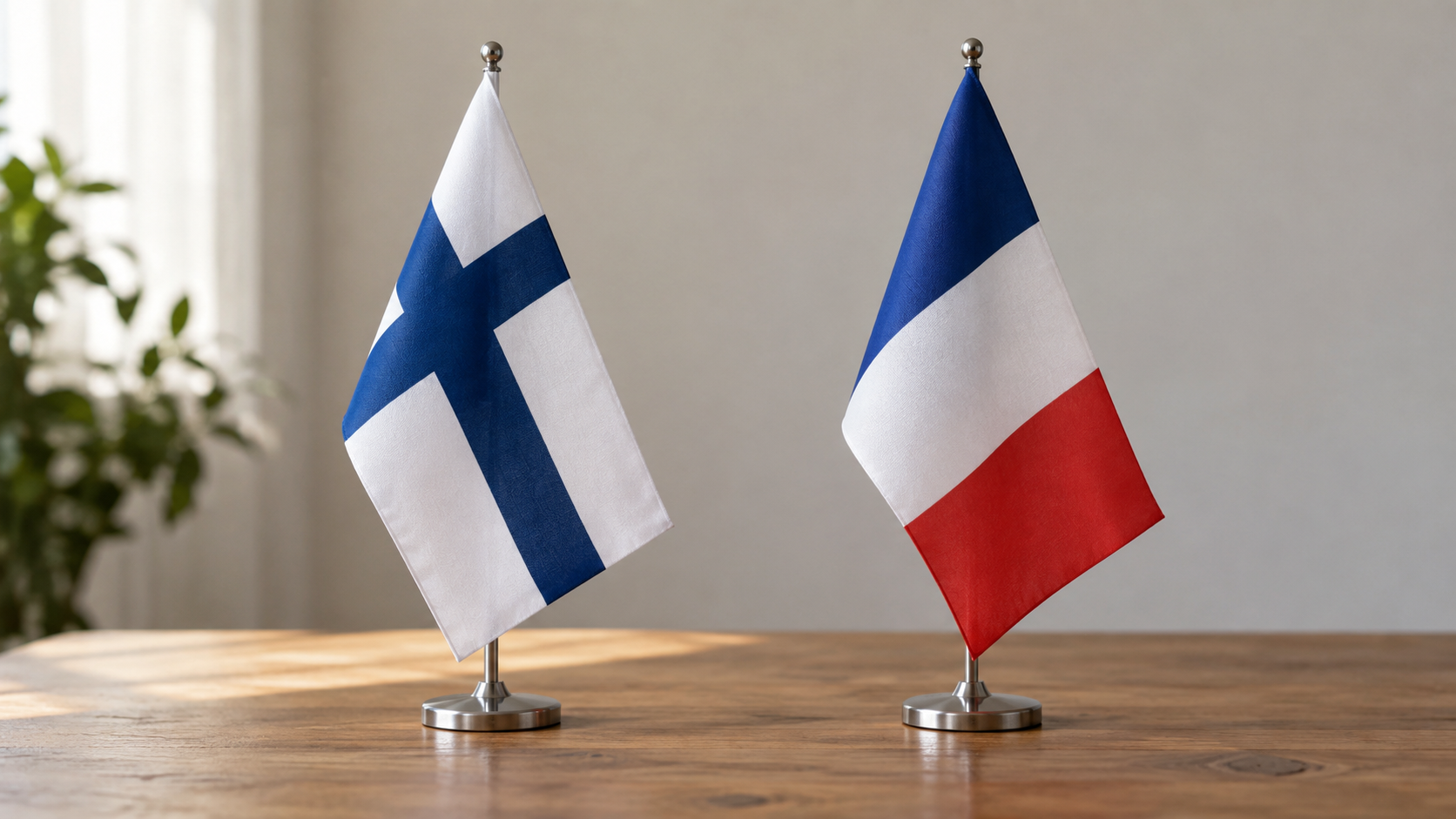
Finland joined France’s forward deterrence initiative on September 14, 2026, opening a new avenue for military cooperation while leaving the practical contribution to negotiations. The two countries plan a Nuclear Steering Group within the coming months to begin implementation. Their joint statement makes the political decision clear, but provides no deployment schedule or specified Finnish military commitment. Joint statement.
For Finland, the immediate change is participation in a French-led framework alongside its existing alliance commitments. President Alexander Stubb said the programme had been discussed extensively with the United States and NATO. He also said Finland does not intend to allow nuclear weapons to be stationed on its territory in peacetime, according to Reuters’ press-conference reporting.
What forward deterrence offers Finland
French President Emmanuel Macron introduced forward deterrence in his March 2 speech at Île Longue, describing a European dimension to France’s vital interests. The September statement says cooperation should create opportunities to signal resolve and manage escalation before it reaches nuclear conflict. These are the two governments’ objectives for the initiative, whose implementation is assigned to the future steering group. Bilateral statement.
The Finnish Defence Ministry describes several possible forms of cooperation: discussions about French nuclear doctrine, observing exercises, contributing conventional military capabilities, or temporary deployments of elements of France’s strategic air forces in an allied country. Those options give the negotiations a concrete agenda. The ministry presents them as possibilities for participants, rather than a list of operations Finland has already agreed to conduct. Ministry explanation.
Finland becomes the tenth participant, Reuters reported. Norway, Sweden and Denmark had already joined, placing the Finnish decision within a wider Nordic engagement with France. Stubb said the exact cooperation would become clearer later and that participants would determine their own contributions. Forward deterrence therefore begins with a common political framework while leaving room for different national commitments. Reuters report.
France keeps authority over its weapons
The central limit is control. Finland’s ministry says France retains sole discretion over its nuclear weapons and decisions concerning vital French interests. Forward deterrence does not offer an alternative nuclear umbrella, in the ministry’s description. Participation gives Finland a channel for cooperation and consultation; it does not give Helsinki authority to order the use of French nuclear weapons. Finnish government account.
That division between consultation and national authority also matters when comparing the initiative with NATO. The alliance’s Nuclear Planning Group brings together every member except France, which has chosen not to participate. It addresses nuclear policy, planning, military posture, capabilities and exercises during peace, crises and conflict. Membership of that forum is distinct from owning a nuclear arsenal. NATO’s institutional explanation.
NATO identifies France, Britain and the United States as its three nuclear-weapon states. It says the independent French and British forces contribute to alliance security, alongside the U.S. strategic deterrent. In NATO’s nuclear-sharing arrangements, Washington retains control and custody of American weapons deployed in Europe. Allied consultation thus operates alongside continuing national decisions about the weapons themselves. NATO policy and forces.
Exercises, costs and the next decisions
Forward deterrence also leaves financial and participation questions with national governments. Defence Minister Antti Häkkänen says countries choose their pace of engagement, take on no obligations equivalent to NATO collective defence, and are not being asked to contribute to maintaining France’s nuclear deterrent. Finnish defence officials will prepare practical negotiations with France. Häkkänen’s explanation.
Countries can contribute to nuclear deterrence without possessing nuclear weapons. NATO describes roles including conventional support for nuclear operations, consultations, and planning or hosting exercises. That background helps explain the distinction between Finland contributing ordinary military capabilities and acquiring a nuclear arsenal. Under forward deterrence, the precise Finnish role will depend on the bilateral negotiations. NATO’s account of allied contributions.
The next documented milestone for forward deterrence is establishing the bilateral steering group. Its work should begin translating September’s decision into practical cooperation. The joint statement leaves the group’s detailed programme and timetable unspecified. Readers can assess subsequent announcements against that starting point: the participation decision is complete, while concrete arrangements remain to be negotiated. Published commitment.
This report separates the signed announcement, officials’ policy explanations and prospective military options under The Civic Wire’s editorial standards for evidence and attribution.